A complete payment gateway for Indian business
Accept UPI, cards, net banking, and wallets on one integration — priced with multi-acquirer rate shopping for a lower MDR, and engineered with live failover for a higher success rate. Checkout, payment links, subscriptions, settlements, payouts, and reconciliation are all included.
Payment acceptance
Every method your customer expects to see
UPI, cards, net banking, and wallets on one gateway — plus payment links and subscriptions for the collections that don't happen at a checkout.
UPI — Intent, Collect & QR
Deep-link into any UPI app, collect against a VPA, or render a dynamic QR with terminal status polling. UPI AutoPay for recurring.
Cards
Domestic and international credit, debit, and prepaid cards across major networks, with 3-D Secure and RBI-compliant tokenisation.
Net banking
All major Indian banks with a bank picker, redirect handling, and status reconciliation on return.
Wallets
Popular UPI-linked and prepaid wallets, presented alongside every other method in the same checkout.
Payment links & QR
Collect with no integration at all — shareable links, invoices, and static or dynamic QR for offline and remote collection.
Subscriptions & mandates
UPI AutoPay and card mandates with configurable retry schedules, dunning, and lifecycle webhooks on every debit.
Pricing & MDR
A lower effective MDR, transaction by transaction
A single-gateway merchant pays one rate card for everything. We hold rates with multiple acquirers and route each transaction to the cheapest one that can process it — so your blended MDR is lower than any one quote.
Multi-acquirer rate shopping
We hold rates with several acquirers and send each transaction to the cheapest one eligible for it — by method, BIN, network, and amount band.
No setup or AMC fee
No onboarding charge, no annual maintenance, no platform minimum. You pay per successful transaction.
Method-level pricing
UPI, cards, net banking, and wallets are priced separately, so a UPI-heavy mix isn't cross-subsidising card rates you rarely use.
Volume slabs
Effective MDR steps down as monthly volume grows, applied automatically rather than at your next contract renewal.
Transparent settlement math
Every payout shows gross, refunds, chargebacks, MDR, GST, and TDS line by line — no unexplained deductions.
Rate changes without re-integration
When an acquirer improves your rate, we shift share to them from the dashboard. Your code never changes.
Final MDR depends on your business category, payment mix, and monthly volume. Share your current rate card and we'll quote against it.
Success rate
Fewer failed payments, without you doing anything
Most lost transactions aren't lost customers — they're a degraded bank rail, a soft decline, or a timeout. We detect those in real time and give the payment another route before the customer gives up.
Live rail health scoring
Acquirers and bank rails are scored continuously on success rate, error rate, and latency — degradation is detected in minutes, not at end of day.
Automatic failover
When a rail's circuit opens, traffic moves to the next healthy acquirer in your fallback chain without a failed customer attempt.
Smart retries
Idempotent retries with exponential backoff recover soft declines and timeouts that a single-gateway setup would simply drop.
Bank downtime awareness
Net banking and UPI handles that are down get de-prioritised in the checkout ordering so customers don't pick a broken option.
Checkout drop-off reduction
Mobile-first, fast-loading checkout with saved instruments and method pre-selection based on what the customer used last.
Success-rate reporting
Break down authorisation rate by method, bank, acquirer, and BIN so you can see exactly where attempts are being lost.
Checkout & Payment Links
A checkout you don't have to build
Create a payment session and hand the customer a PayVizio-branded checkout supporting cards, UPI, and net banking — with coupons, surcharges, 3-D Secure, and payment links included.
PayVizio-branded checkout
Create a payment session via POST /api/payments and redirect customers to a hosted checkout you don't have to build.
Cards, UPI & netbanking
Customers pay by card, UPI, or net banking — with handoff to the acquirer's hosted page when required.
Coupons & surcharges
Preview and redeem coupon discounts, and calculate per-method surcharges, scoped to the checkout session.
3DS & saved instruments
3-D Secure authentication, address verification (AVS), and saved-instrument flows are built in.
PCI-compliant sessions
Sessions expire after 30 minutes and are tenant-isolated — a session only ever belongs to its owning merchant.
Payment links
Generate shareable payment links for invoicing and remote collection without a custom checkout integration.
Settlements & Payouts
Money in, money out, on your schedule
Settle collections to your bank on a standard or on-demand cycle, and disburse outbound payouts to vendors, sellers, and customers from the same platform — with refunds and chargebacks handled end to end.
Standard & on-demand settlement
Settle to your bank on the standard cycle, or pull funds on demand when working capital needs it.
Outbound payouts
Disburse to vendors, partners, sellers, or customers over IMPS, NEFT, RTGS, and UPI from the same balance.
Bulk & scheduled runs
Upload or API-submit bulk payout batches with idempotent processing, safe retries, and per-record status tracking.
Refunds
Full or partial refunds, idempotent by reference, posted straight back to the ledger and the customer's original method.
Chargeback lifecycle
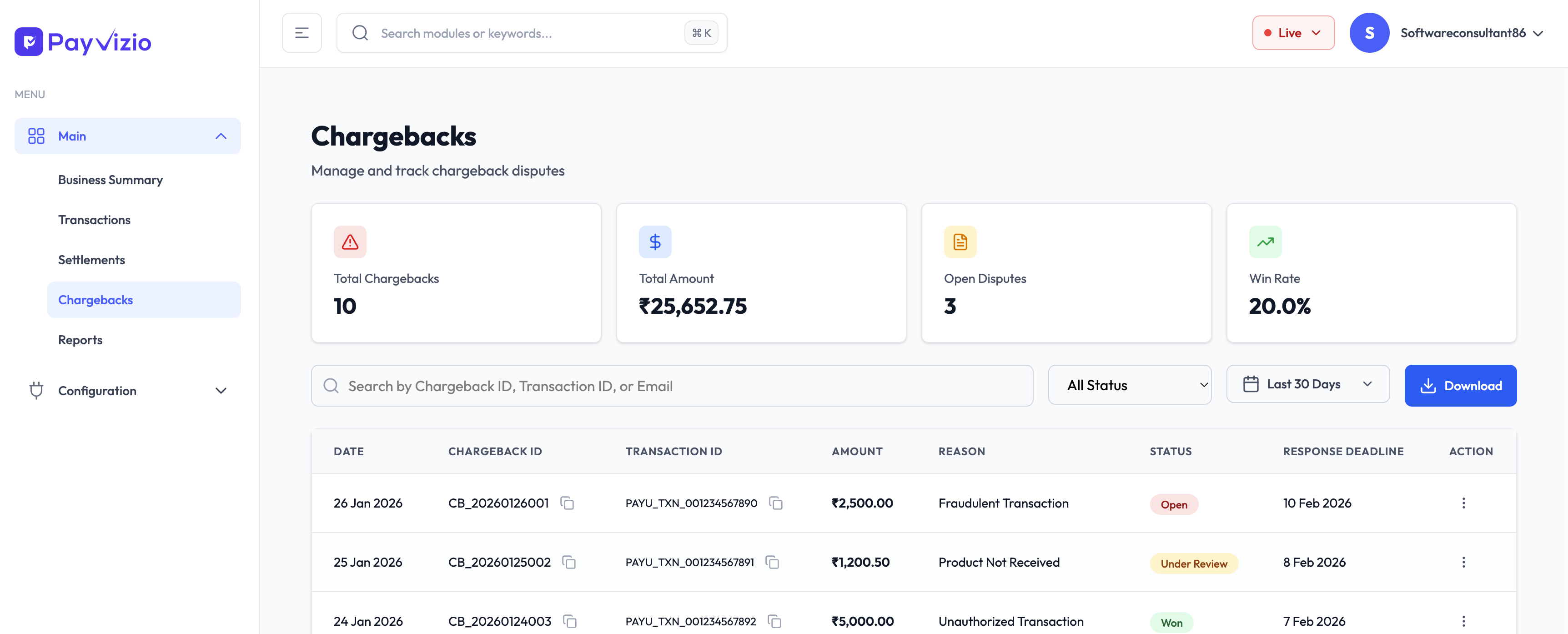
Per-acquirer chargeback sync with evidence upload, deadline tracking, and outcomes posted back to your books.
No fund custody
Settlement runs acquirer → your bank. We enrich and reconcile the books; we don't sit on your money.
Under the hood
The multi-acquirer engine behind both numbers
Lower MDR and higher success rate aren't features you toggle — they're the output of a routing engine choosing, for every single transaction, the acquirer that is cheapest and healthiest at that moment.
Multi-acquirer routing
One integration routes CARD, UPI, NET_BANKING, and WALLET traffic across every acquirer you connect.
Rule-based routing
Merchant rules match on payment method, BIN prefix, card/IP country, amount range, currency, and bank code — applied in priority order.
Health-based scoring
When no rule matches, the engine scores acquirers on success rate, error rate, latency, circuit-breaker status, and per-minute volume.
Cascading failover
Failed transactions cascade through a ranked fallback chain, skipping unhealthy acquirers to lift authorization rates.
Smart retries
Idempotent retries with exponential backoff and per-acquirer circuit breakers, built on Resilience4j.
Per-merchant credentials
Encrypted, isolated acquirer credentials (AES-256-GCM or AWS KMS) with per-acquirer enable/disable controls.
Reconciliation & Settlement
Books that balance, automatically
Settlement files from every acquirer are matched against a double-entry ledger. Mismatches are detected and auto-adjusted where safe, on a daily schedule, with chargebacks posted back to the ledger.
Settlement file ingestion
Parse multi-PSP settlement files and process one batch per acquirer and settlement date, with duplicate-batch protection.
Automated matching
Match settlement records to ledger captures by gateway reference, flagging anything missing or mismatched.
Mismatch detection
Detect missing-in-settlement, amount, and status mismatches; auto-adjust the cases that are safe to adjust.
Double-entry ledger
Every payment, refund, settlement, and adjustment is recorded in a balanced double-entry ledger with full audit trail.
Scheduled reconciliation
Reconciliation runs on a daily schedule, marking each batch COMPLETED or PARTIAL based on discrepancies found.
Chargeback handling
Per-acquirer chargeback sync runs after the settlement window with a configurable lookback, posted back to the ledger.
Technical architecture
Request and settlement flow
Merchant requests hit the API gateway, are orchestrated across acquirers, and flow through the PSP layer to banks. The ledger and settlement engine feed reconciliation and reporting.
Merchant → API Gateway → Orchestration → PSP Layer → Bank
                ↓                ↑
            Ledger ← Failover/Retry
                ↓
Settlement → Reconciliation → ReportingProduct
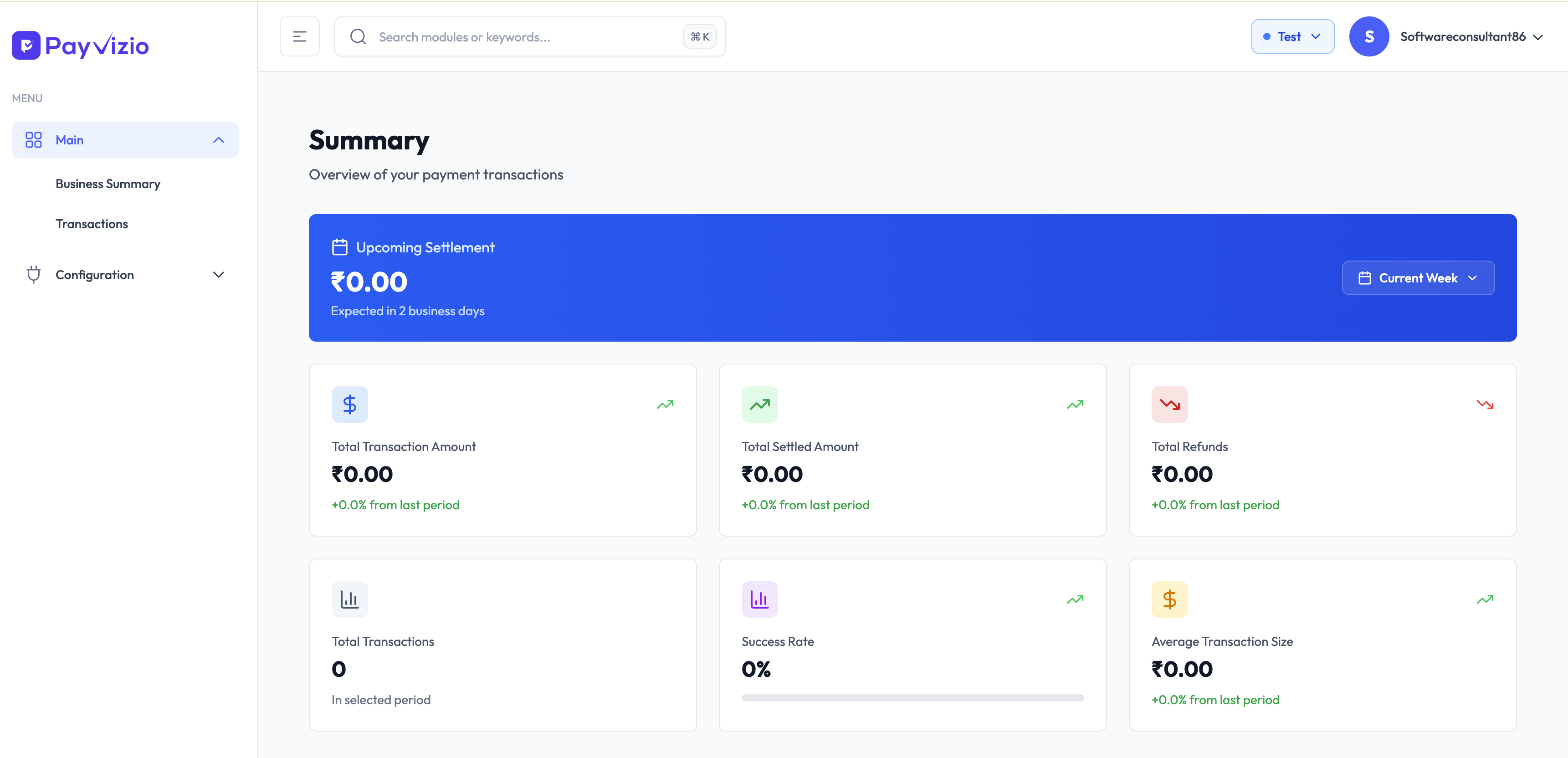
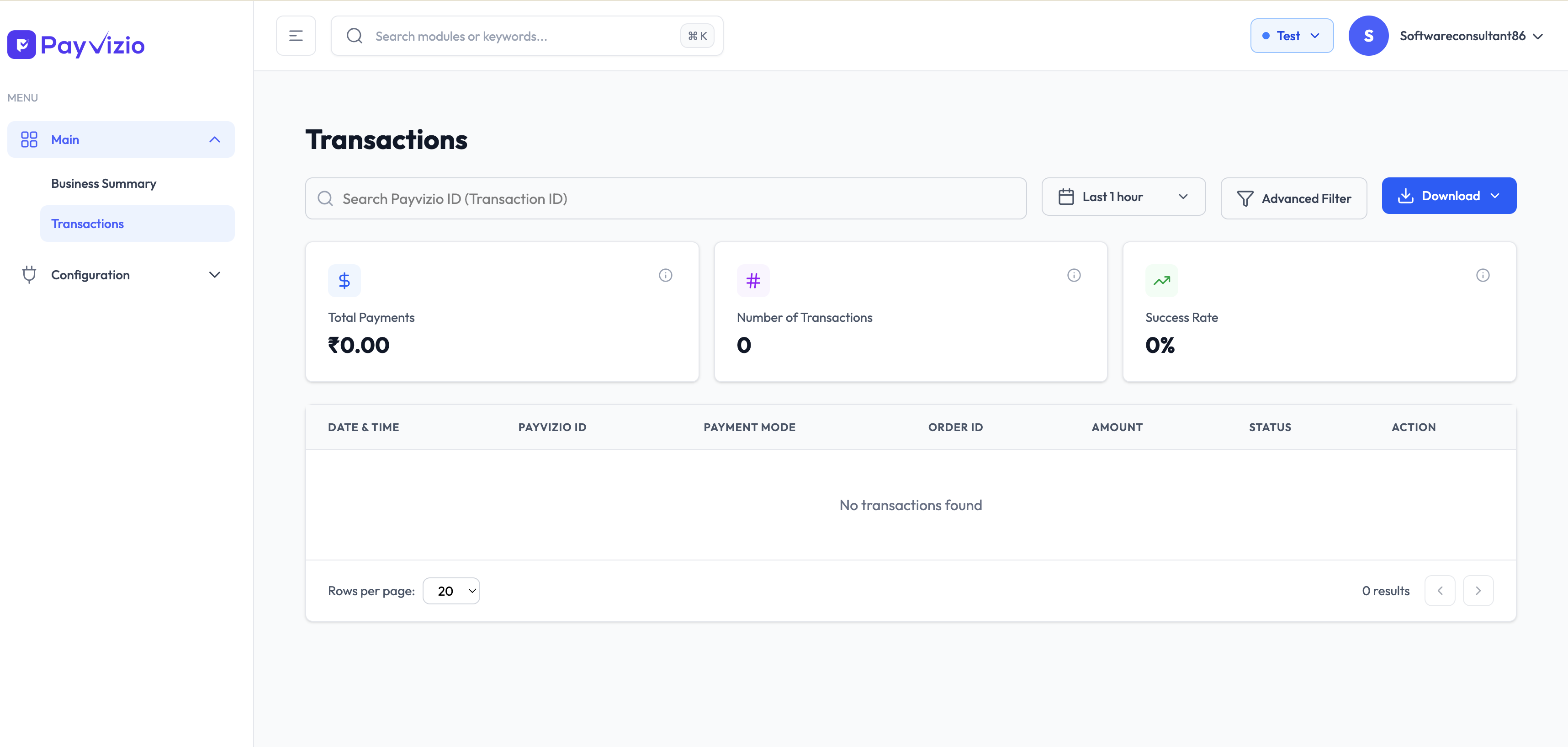
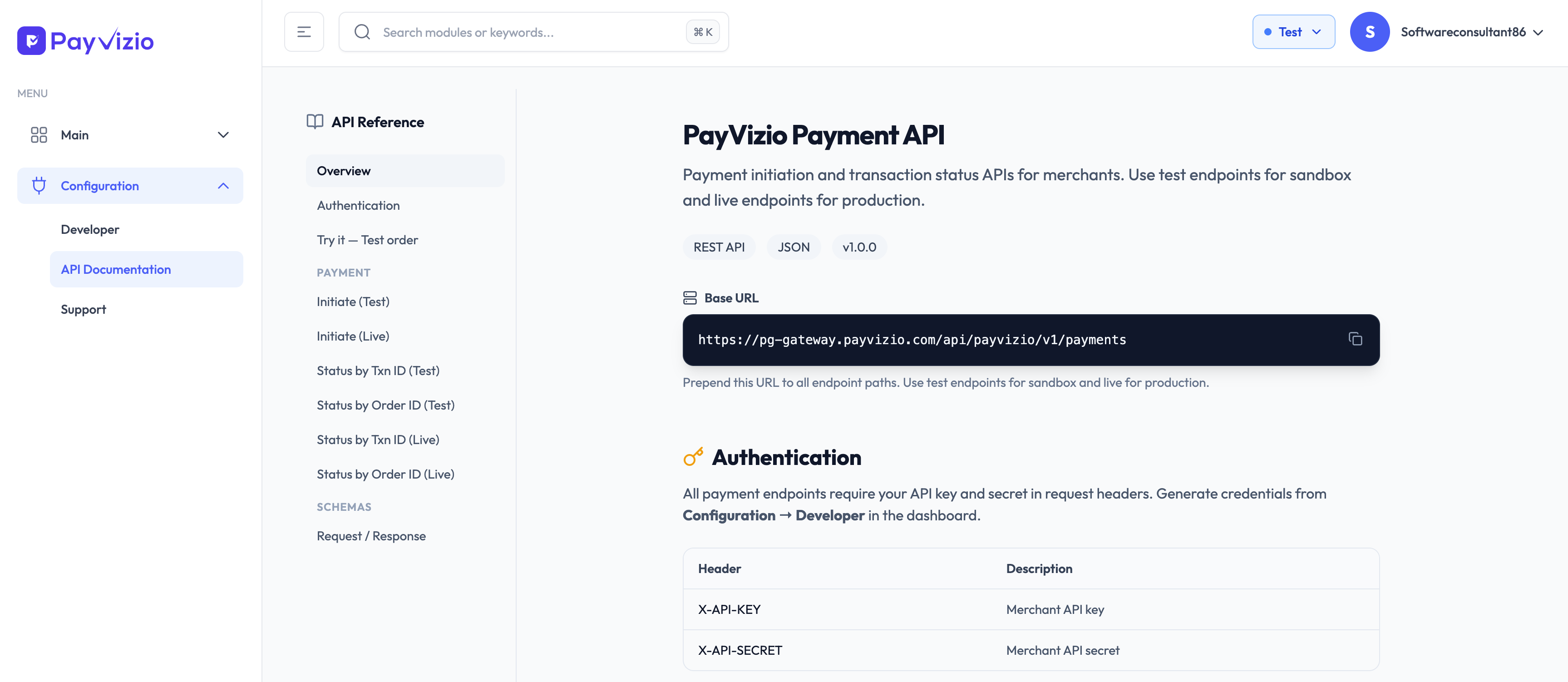
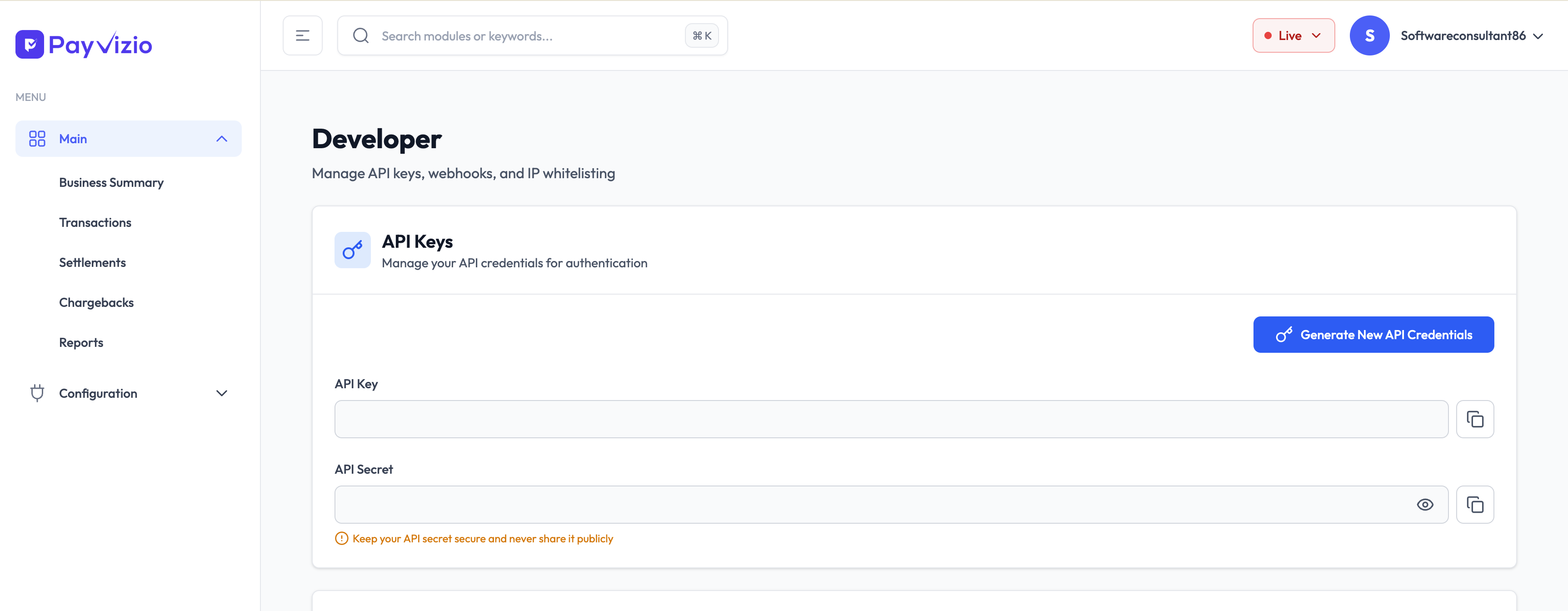
PayVizio dashboards
Merchant and admin dashboards, transaction monitoring, and operations — built for enterprise visibility and control.